Shorts vs TikTok vs Reels Monetization (2026)
How YouTube Shorts, TikTok and Instagram Reels pay creators under their published rules: eligibility, revenue share, video length and invite-only programs.

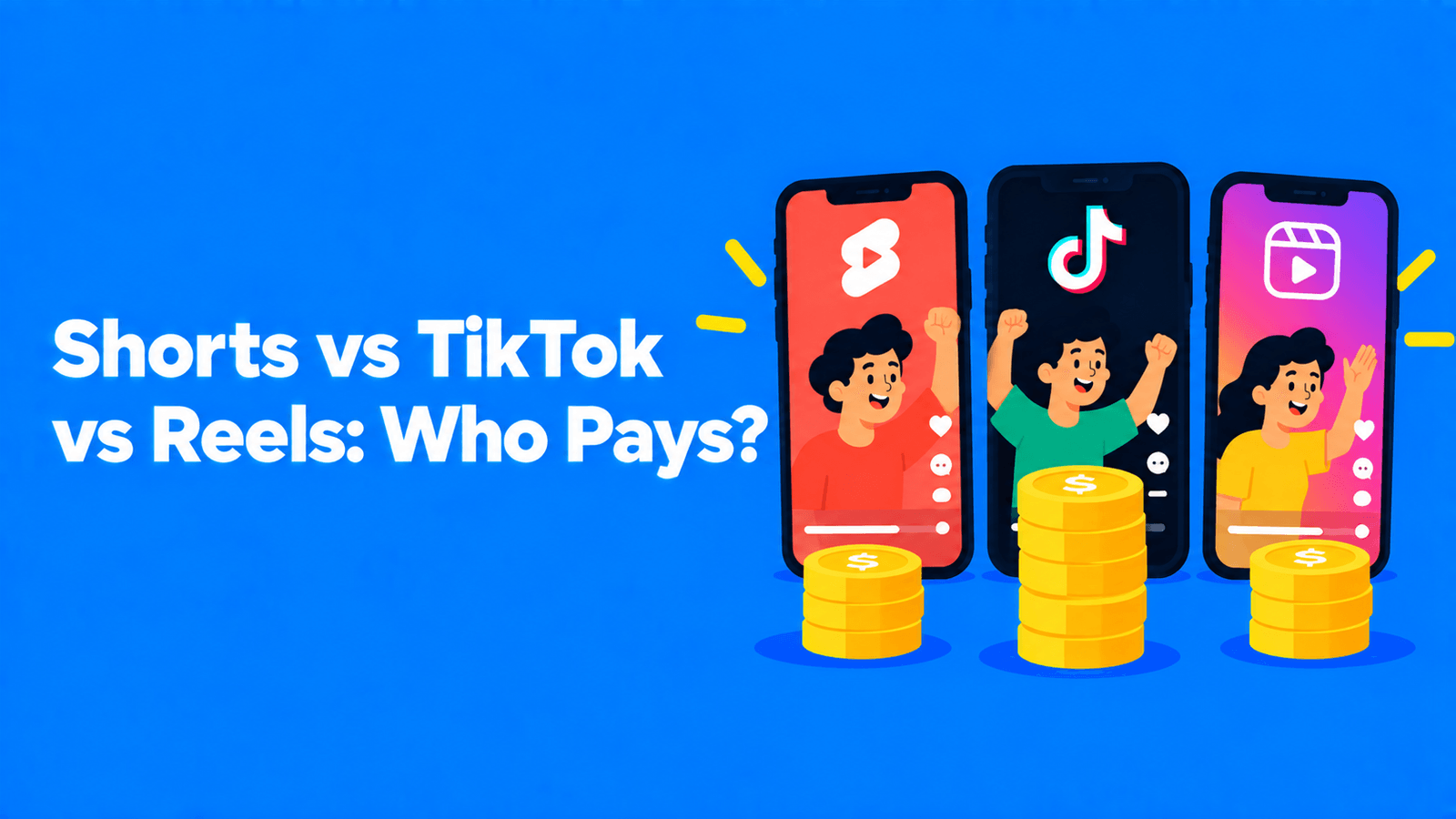
YouTube Shorts is the only one of the three with an open, published ad-revenue share for short videos. Once you're in the YouTube Partner Program and accept the Shorts Monetization Module, you keep 45% of the Shorts ad revenue allocated to you (YouTube Help). TikTok pays through its Creator Rewards Program, but only for original videos longer than one minute, from accounts with at least 10,000 followers and 100,000 video views in the last 30 days (TikTok Creator Academy). Instagram has no open programme that pays per Reels view. It pays through gifts, subscriptions and bonuses, and its bonuses are "limited time and invite-only" (Instagram Creators). None of the three publishes a rate per 1,000 views, so any RPM you see quoted elsewhere is someone's estimate, not a rule.
Checked September 30, 2026 against each platform's own help and creator pages. Monetisation rules change often; the linked pages are the final word.
The comparison at a glance
| YouTube Shorts | TikTok | Instagram Reels | |
|---|---|---|---|
| Main programme | YouTube Partner Program: Shorts ad revenue sharing | Creator Rewards Program | Gifts, subscriptions, bonuses |
| Entry bar | 1,000 subscribers plus 10 million qualified Shorts views in 90 days, or 4,000 qualified watch hours in 12 months | 10,000 followers and 100,000 video views in the last 30 days | Professional (creator or business) account; bonuses by invitation only |
| Video length that earns | Shorts are up to 3 minutes | Videos over 1 minute | No published length rule |
| How pay is worked out | Your share of engaged views in a Creator Pool, of which you keep 45% | Qualified views on eligible videos | Fans' gifts and subscriptions; bonuses based on performance |
| Open to apply? | Yes, in countries where YPP is available | Yes, where the programme is available | Gifts and subscriptions depend on availability; bonuses invite-only |
| Published rate per view | None | None | None |
Sources: YouTube Partner Program, Shorts monetization policies, three-minute Shorts, TikTok Creator Academy, Instagram Creators, Instagram payouts.
YouTube Shorts: an ad-revenue share
Who qualifies
YouTube has two levels in the Partner Program (YouTube Help):
- Fan funding and Shopping: 500 subscribers and 3 valid public uploads in the last 90 days, plus either 3,000 qualified watch hours in the last 12 months or 3 million qualified Shorts views in the last 90 days. This unlocks channel memberships, Super Chat and Super Stickers, Super Thanks, and Shopping, but not ad revenue.
- Ad revenue sharing: 1,000 subscribers with either 4,000 qualified watch hours in the last 12 months or 10 million qualified Shorts views in the last 90 days.
Qualified Shorts views are "views from Shorts you've set public that appear in the Shorts Feed." You also need to follow the channel monetisation policies, live in a country where YPP is available, have no active Community Guidelines strikes, turn on 2-Step Verification, have advanced features access and have an AdSense for YouTube account (YouTube Help).
How the money is split
YouTube pools the ad revenue from the Shorts Feed each month, then allocates it to a Creator Pool. That pool is shared among monetising creators by their share of engaged views in each country: YouTube's example is that a creator with 5% of eligible engaged views gets 5% of the pool. You then keep 45% of what's allocated to you, whether or not you used music (YouTube Help).
Music changes the pool, not your percentage. YouTube's example: a Short with one music track sends half of the revenue from its engaged views to the Creator Pool and uses the other half to cover music licensing. YouTube also pays 45% of the net YouTube Premium revenue allocated to monetising creators for Shorts.
What doesn't count
YouTube excludes views of "unedited clips from others' movies or TV shows, reuploading other creators' content from YouTube or other platform, or compilations with no original content added," views from bots, and views of Shorts that break its advertiser-friendly guidelines (YouTube Help). If you post clips of other people's footage, read how clipping programmes pay first.
The 2027 change
YouTube's Shorts policy page now says that starting February 1, 2027, to earn Shorts ad and Premium revenue for a given month you'll need at least 10 million qualified Shorts views in the last 90 days (YouTube Help). That applies to every channel, including ones that joined YPP through long-form watch hours. We cover the details in YouTube Shorts monetization requirements for 2027.
Also note that the Views number in YouTube Studio isn't the number that pays: revenue is shared by engaged views. See YouTube views vs engaged views.
TikTok: the Creator Rewards Program
TikTok's Creator Academy sets out the programme's rules (TikTok Creator Academy):
- Account: at least 10,000 followers and 100,000 video views in the last 30 days, in a country where the programme is available, and no fraud or Community Guidelines violations.
- Videos: original, high-quality content over 1 minute long. Duets and Stitches don't count. TikTok describes original content as content "designed, filmed, and produced by you."
- Views that count: TikTok pays on qualified views. These are unique views from the For You feed. Views that are fraudulent, paid, promoted, artificial or disliked don't count, and neither do views of less than 5 seconds. A video also needs a minimum number of qualified views before it earns.
TikTok doesn't publish a fixed rate, and the programme isn't in every country. Check eligibility in the Creator Academy or in the app before planning around it (Join the Creator Rewards Program).
The length rule is the big practical difference from Shorts. A 45-second video can earn on YouTube but not in TikTok's programme.
Instagram Reels: fan payments and invite-only bonuses
Instagram's creator site lists its money tools: subscriptions, partnership ads (branded content), the creator marketplace, gifts, badges and bonuses (Instagram Creators). For Reels specifically:
- Gifts: "People can purchase Stars and share virtual gifts directly in the Instagram app to show appreciation for Reels they love" (Instagram Creators). Pay depends on fans choosing to send gifts, not on views.
- Bonuses: these reward "the performance of your reels and photos," but they are "limited time and invite-only as we build toward a sustainable program" (Instagram Creators).
- Subscriptions: followers pay a monthly fee for subscriber-only content, and Instagram says payouts arrive on the 21st of the following month (Instagram Creators).
Payouts need a business or creator account, compliance with Meta's partner monetisation policies and a payout account. The minimum balance before Instagram pays out is $5 in the US, and outside the US $100 by wire transfer or $25 by other methods (Instagram Help).
On Facebook, Meta's Content Monetization programme pays for Reels, photos, text posts and stories, but it's "currently invite-only" (Meta for Creators).
So which one pays best?
Nobody can answer that from the published rules, because none of the platforms publishes a per-view rate. What the rules do tell you:
- Only YouTube publishes a revenue share, and its payout per view moves with ad revenue, music use and every other creator's views in the pool.
- TikTok rewards longer, original videos. Anything one minute or shorter isn't eligible.
- Instagram pays through your audience, unless you're invited to bonuses. Its brand-deal tools (partnership ads and the creator marketplace) sit outside these payouts.
Your own analytics will tell you more than any third-party RPM table. Compare what each platform actually paid you per video over a few months.
One video, three platforms: formats that fit every rule
If you post the same video everywhere, a vertical video between just over one minute and three minutes meets both YouTube's Shorts limit and TikTok's Creator Rewards minimum. Shorter clips still work on Shorts and Reels, but won't earn in TikTok's programme.
If you cut these from long videos, pick moments that hold up for 60 to 180 seconds and upload a clean file to each platform. Exemplary AI (our product) can help here: in AI Clips you can ask for "60-90s" or "90-3min" clips from a video of at least 10 minutes, reframe them to 9:16 and add captions. The length choice is a target, so trim any clip that runs past three minutes before posting it as a Short. For more on picking lengths, see how long YouTube Shorts can be.
FAQ
Which pays more, YouTube Shorts, TikTok or Instagram Reels?
None of them publishes a rate per view, so there's no rule-based answer. YouTube Shorts has the only published revenue share (45% of your allocated share of the Creator Pool). TikTok pays for qualified views on original videos over one minute. Instagram pays through gifts, subscriptions and invite-only bonuses.
How many views do you need to monetize YouTube Shorts?
For ad revenue, 1,000 subscribers plus 10 million qualified Shorts views in the last 90 days (or 4,000 qualified watch hours in 12 months). From February 1, 2027, you'll also need 10 million qualified Shorts views in the last 90 days to earn Shorts ad revenue in a given month.
Does TikTok pay for videos under one minute?
Not through the Creator Rewards Program, which only counts original videos over one minute long.
Does Instagram pay for Reels views?
Not through an open programme. Bonuses that reward Reels performance are limited-time and invite-only. Otherwise, Reels earn through gifts from viewers, and your account can earn from subscriptions and brand partnerships.
Can I post the same video on all three platforms?
You can, as long as it's your own work. Keep it vertical and between one and three minutes if you want it to meet both YouTube's Shorts limit and TikTok's Creator Rewards length rule.