Translate Japanese Audio to English
Turn Japanese speech in a video, podcast or voice recording into an English transcript and English subtitles you can download.
Free to start — no credit card required.
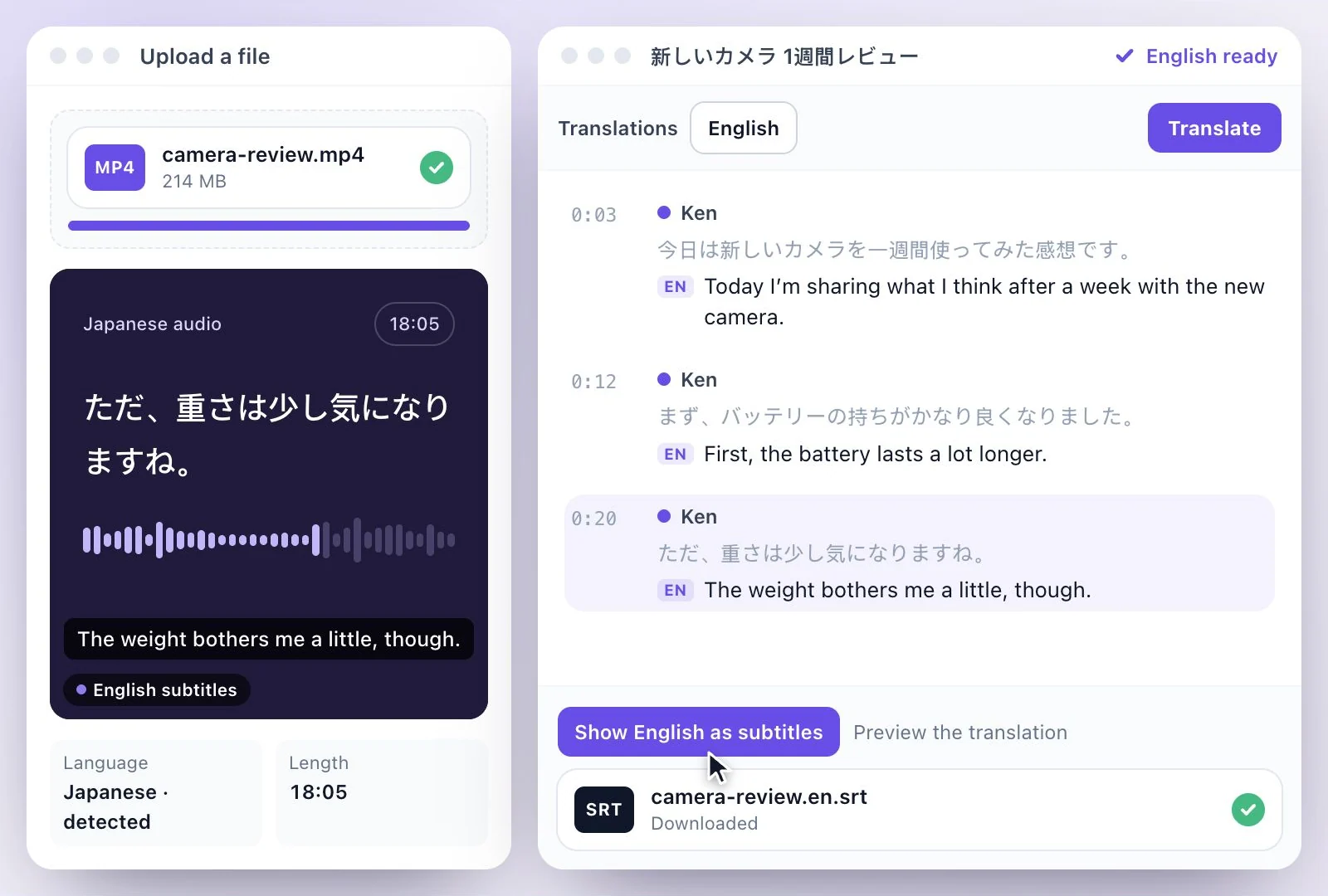
Japanese recordings come in as product reviews, tutorials, interviews with Japanese partners and vlogs, and English subtitles open them to viewers in the US.
Exemplary AI writes the Japanese transcript, translates it in the Translations panel and exports the English as PDF, SRT, VTT, TXT, Markdown, JSON or DOCX.
Japanese to English at a glance
Facts checked .
- From
- Japanese (日本語), detected or picked by name
- To
- English, or any of the 116 languages in the translation list
- You get
- English subtitles on the video, and PDF, SRT, VTT, TXT, Markdown, JSON or DOCX downloads
- Voice
- No dubbing or English voice-over
- Long recordings
- Over 30 minutes, it asks before translating
- Free plan
- 500 one-time credits; files up to 500 MB and 30 min long; 720p video exports with a watermark
How to translate Japanese audio to English
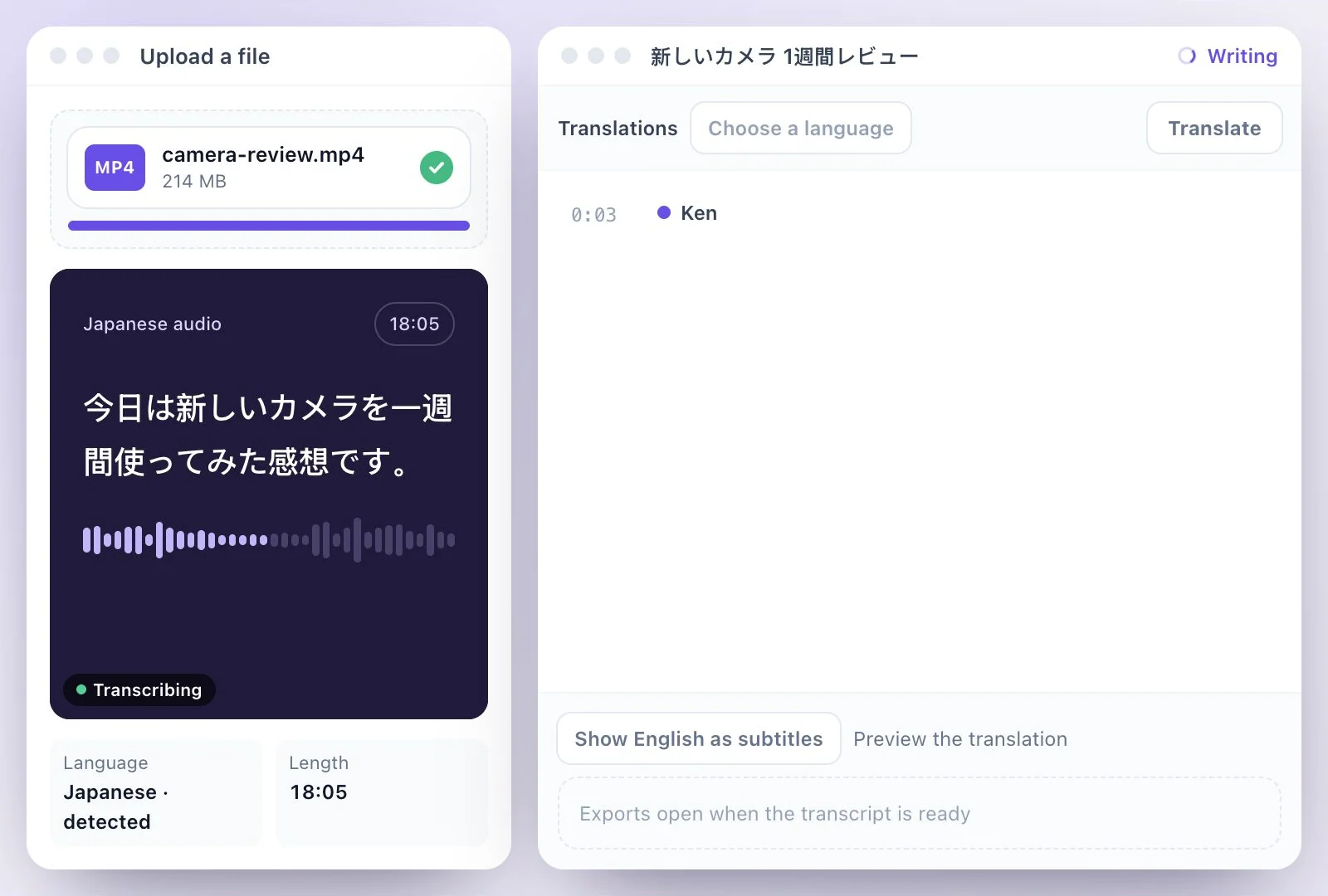
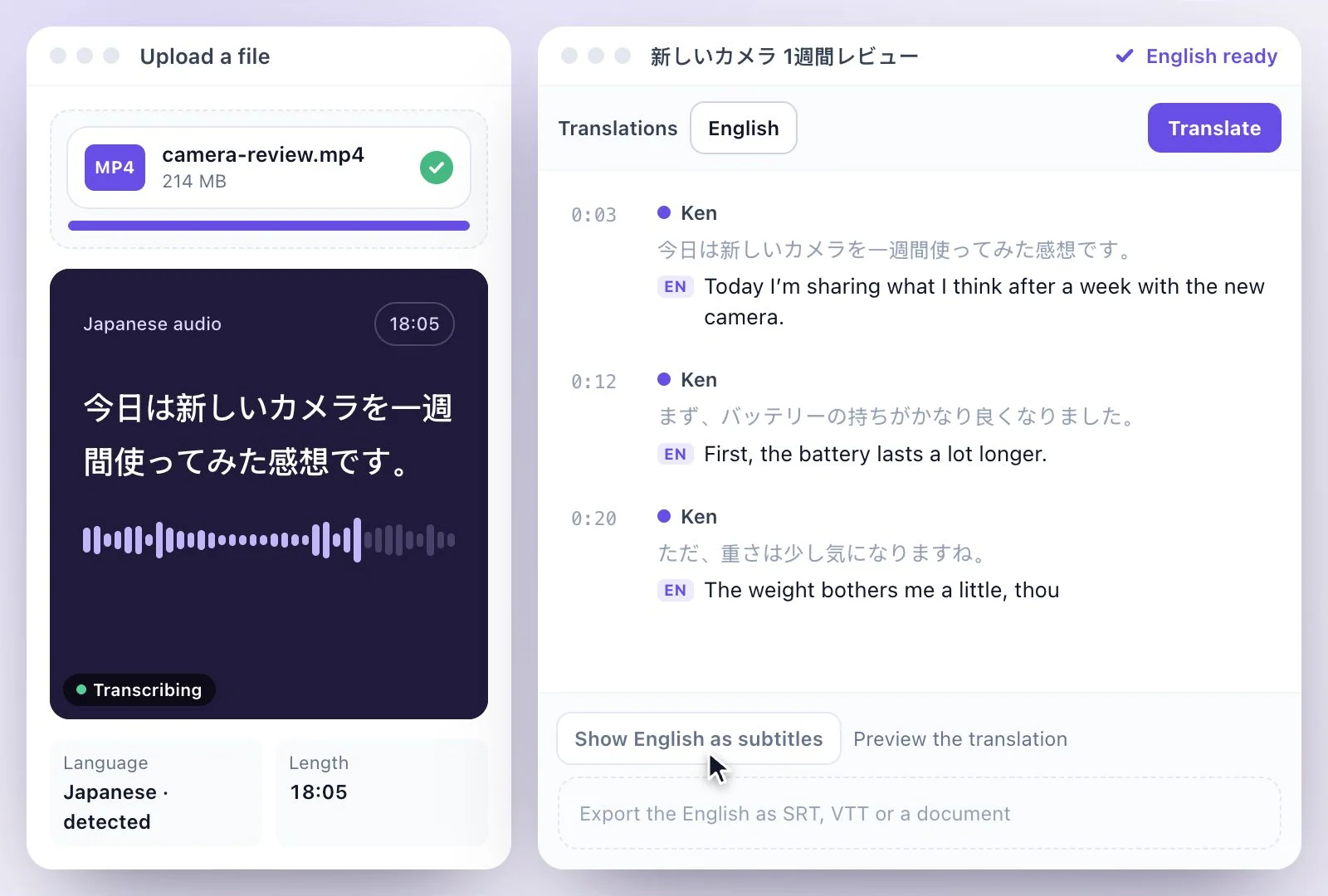
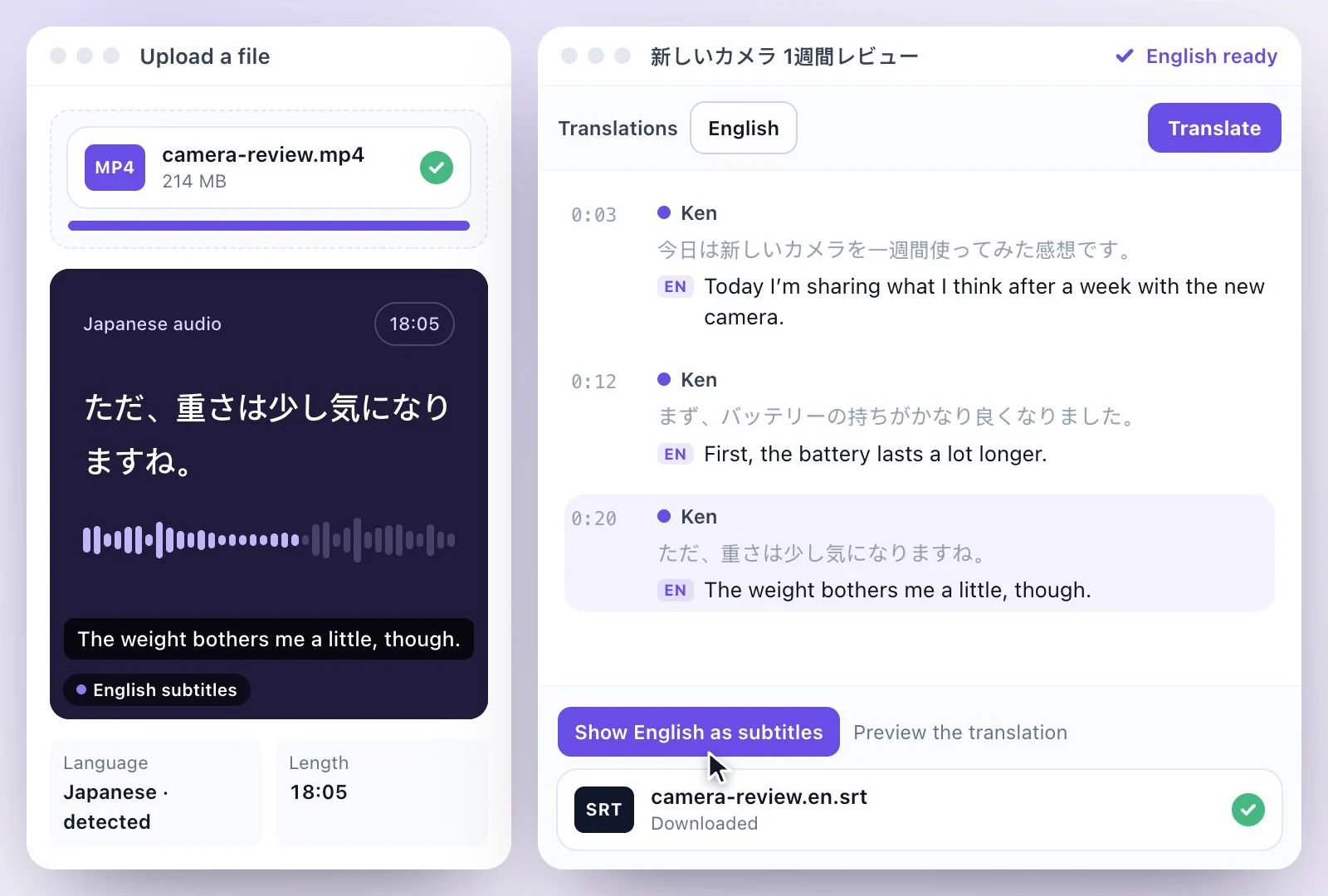
A line of Japanese, and its English
ただ、重さは少し気になりますね。

EN  The weight bothers me a little, though.
Three scripts and no spaces
Written Japanese mixes kanji, hiragana and katakana and puts no spaces between words, so a Japanese line holds more meaning per character than an English one. Expect the English subtitle for a short Japanese line to run longer on screen.
Japanese often leaves out who is doing something when it is clear from context, and English needs a subject in every sentence. That is where a translation can guess wrong between "I", "we" and "they", so read the English of key statements against the video.
Names, honorifics and big numbers
Names come family name first, and many kanji names can be read more than one way, so check how each name appears in the Japanese transcript. Honorifics such as -san, -sama and -sensei have no English equivalent; decide whether your English keeps them or drops them, and stay consistent.
Japanese counts large amounts in units of 万 (ten thousand), so 3万 is 30,000 and 100万 is a million. A slip there changes a price or a view count, so check figures in the English. For the Japanese transcript itself, see Japanese transcription.
Japanese In, English Out
The Japanese transcript comes first, so you check it before it becomes English.
Both languages, line by line
Each English line sits under its Japanese line, with the same timestamp.
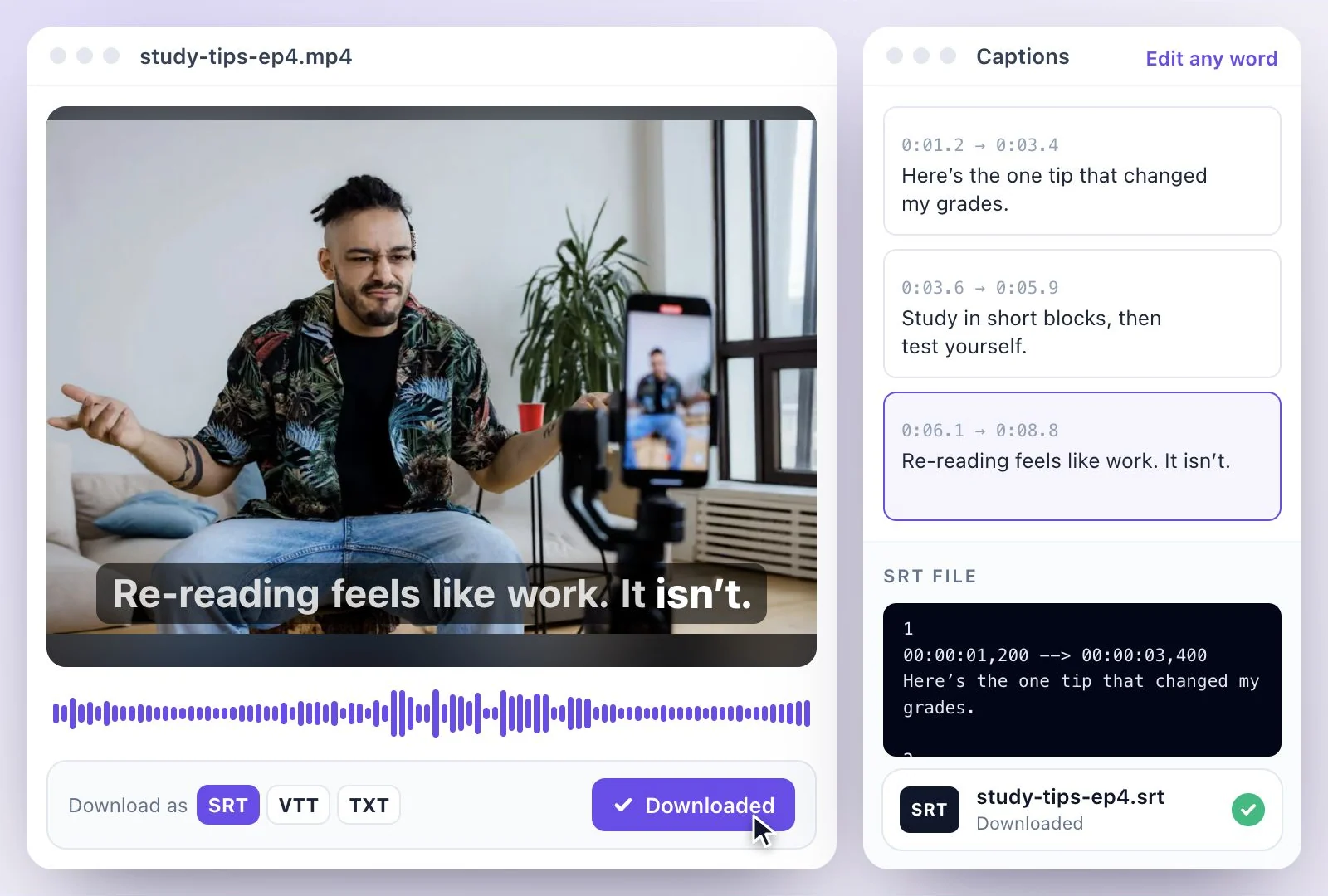
English subtitles on the video
Show English as subtitles plays the translation over the recording before you download it.
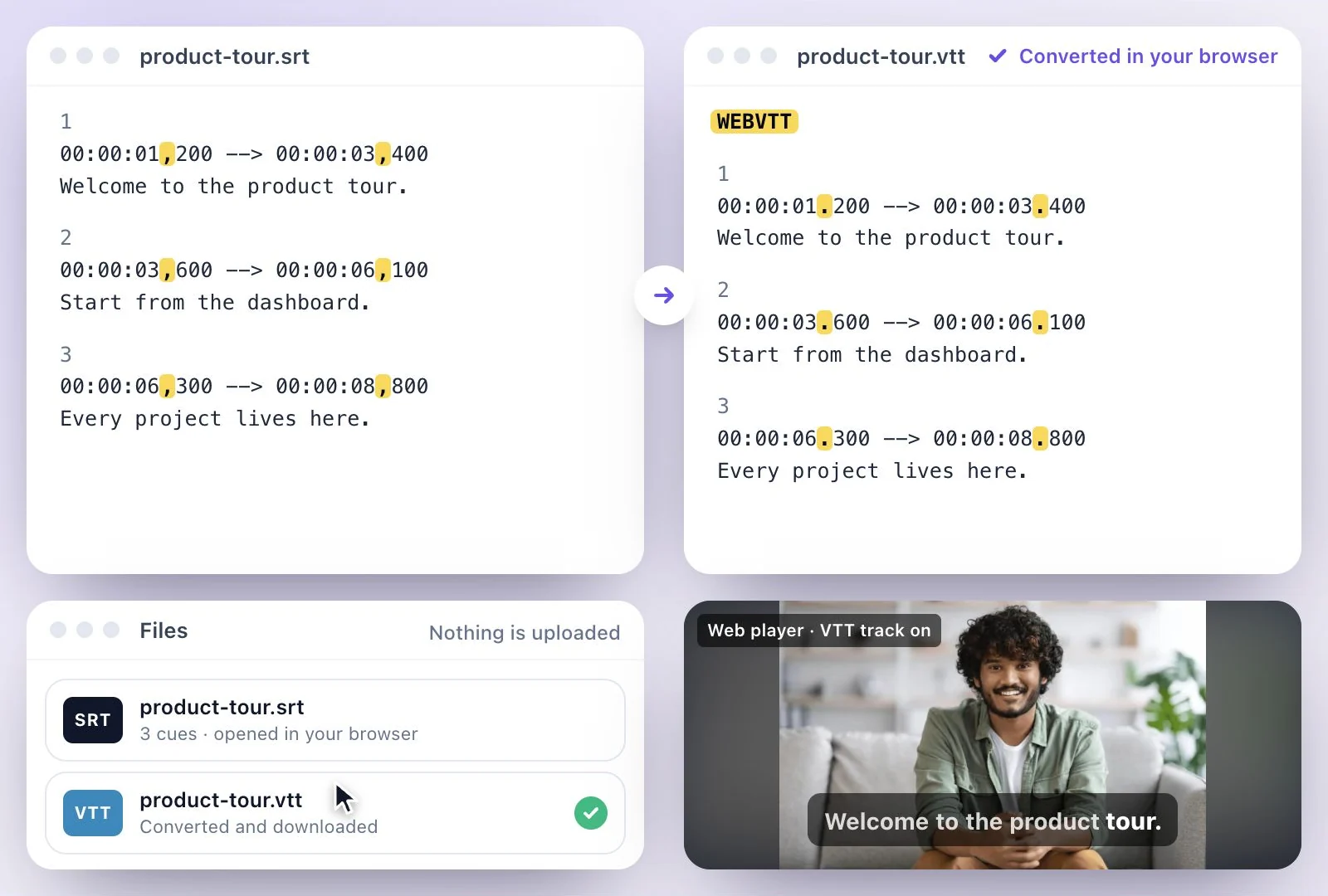
Every line keeps its timing
Each English line sits under the Japanese line it came from, with the same timestamps, so long lines still line up with the speech.
Names checked at the source
Kanji names can be read several ways; correct them once in the Japanese transcript and the English uses your spelling.

Common questions
How do I translate Japanese audio to English for free?
Does it dub Japanese audio into English?
Is the Japanese transcript written in Japanese script?
Does the English keep -san and other Japanese honorifics?
Why are the English subtitles longer than the Japanese lines?
Discover more Transcription
- Video to Text
- Audio to Text
- Audio translator
- Video translator
- Youtube video
- Vimeo video
- Google meet
- Instagram video
- Zoom recording
- MP4 to Text
- MP3 to Text
- TikTok Transcript Generator
- Facebook Video to Text
- Podcast Transcript Generator
- Interview Transcription
- Sermon Transcription
- WhatsApp Audio to Text
- Transcribe Google Drive Video
- Online voice recorder
- Translate Spanish audio to English
- Translate Korean audio to English
- Translate Chinese audio to English
- Translate French audio to English
- Translate German audio to English
- Translate Portuguese audio to English
- Translate Russian audio to English
- Translate Arabic audio to English
- Translate Hindi audio to English
- Tamil Transcription
- French Transcription
- Japanese Transcription
- Hindi Transcription
- Spanish Transcription
- Arabic Transcription
- Chinese Transcription
- Turkish Transcription
- Hebrew Transcription
- Greek Transcription
- Bengali Transcription
- Tagalog Transcription
- Urdu Transcription
- Swahili Transcription
- Afrikaans Transcription
- Albanian Transcription
- Georgian Transcription
- Armenian Transcription
- Uzbek Transcription
- Nepali Transcription
- Sinhala Transcription
- Pashto Transcription
- Amharic Transcription
- Somali Transcription
- Yoruba Transcription
- Hausa Transcription
Bring your Japanese recording to an English audience
Upload the recording, review the Japanese transcript, then check the English translation before exporting.