YouTube Timestamp Generator
Get chapter timestamps for your YouTube video from its transcript, to check and paste into the description.
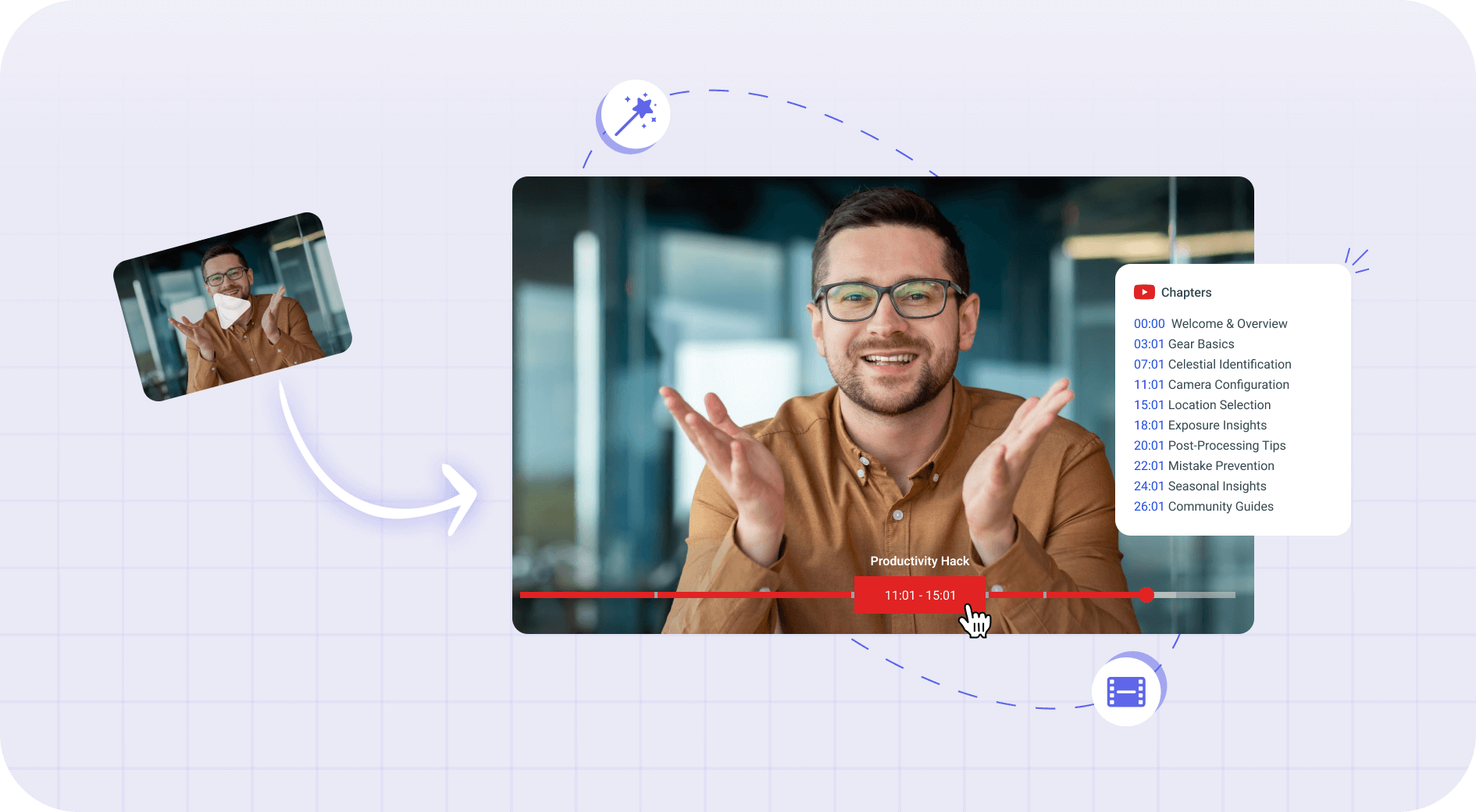
Exemplary AI's YouTube timestamp generator transcribes your video, splits the transcript into sections of roughly equal length (about 1,000 tokens of transcript) and gives each one its start time and a short title, up to 10 chapters.
YouTube turns a list into chapters when it starts at 00:00, has at least 3 timestamps in ascending order, and every chapter lasts at least 10 seconds, so check the list against those rules before you paste it into your description.
How to generate YouTube timestamps
- Upload the audio or video file, or paste a YouTube, TikTok, Vimeo or X link, and pick the language it is spoken in.
- In the AI content presets, open "YouTube Video" and select "Chapters".
- When the list is ready, check that the first line starts at 00:00 (change it if the first section starts a few seconds in), that there are at least 3 lines, and that no chapter is shorter than 10 seconds. Then copy it. A short video has few sections, so add lines by hand if there are fewer than 3.
- Paste the list into your video's description in YouTube Studio and save.
What you get
Facts checked .
- Output
- Up to 10 lines, each a start time, a dash and a title of up to 7 words ("hh:mm:ss - Title")
- How it splits
- Into sections of roughly equal length (about 1,000 tokens of transcript), not by time or topic; each chapter starts where its section starts
- Based on
- The transcript, so chapters follow what is said in the video, not what is shown on screen.
- Languages
- 99 languages for the transcript; translate the result into 116 languages
- Other YouTube presets
- Summary, Titles, Chapters, Tweets, Blog, Keywords, Description, Q&A and LinkedIn Post
- Free plan
- The Free plan includes 500 one-time credits; files up to 500 MB and 30 min long; 720p video exports with a watermark. Credits are used by the tasks you run, rather than a fixed number of generations.
YouTube's rules for chapters
- The first timestamp must be 00:00.
- List at least 3 timestamps, in ascending order.
- Each chapter must be at least 10 seconds long.
- Chapters you add in the description override the automatic chapters YouTube generates.
Source: Video Chapters - YouTube Help, checked September 26, 2026.
What YouTube timestamps look like
00:00:00 - Intro
00:00:48 - What video chapters are
00:02:15 - Writing chapter titles
00:04:30 - Adding timestamps in YouTube Studio
00:06:05 - Recap
Chapters your viewers can jump between
Timestamps in the description let viewers skip to the part they came for. The generator writes them from your transcript; check them against YouTube's rules, adjust any chapter start, and paste.
Accurate to start with
Speech is transcribed before anything else happens, so every export downstream inherits the same source of truth.
Editable as text
Correct a name or a term once in the transcript and it is right everywhere. Cutting a sentence cuts the matching video with it.
Export in any format
Subtitle files, burned-in captions, clips, chapters or written copy — all from the one transcript.
See it in action
Tools that work on the same file
You have already uploaded it. These run on the same transcript, so there is nothing to redo.
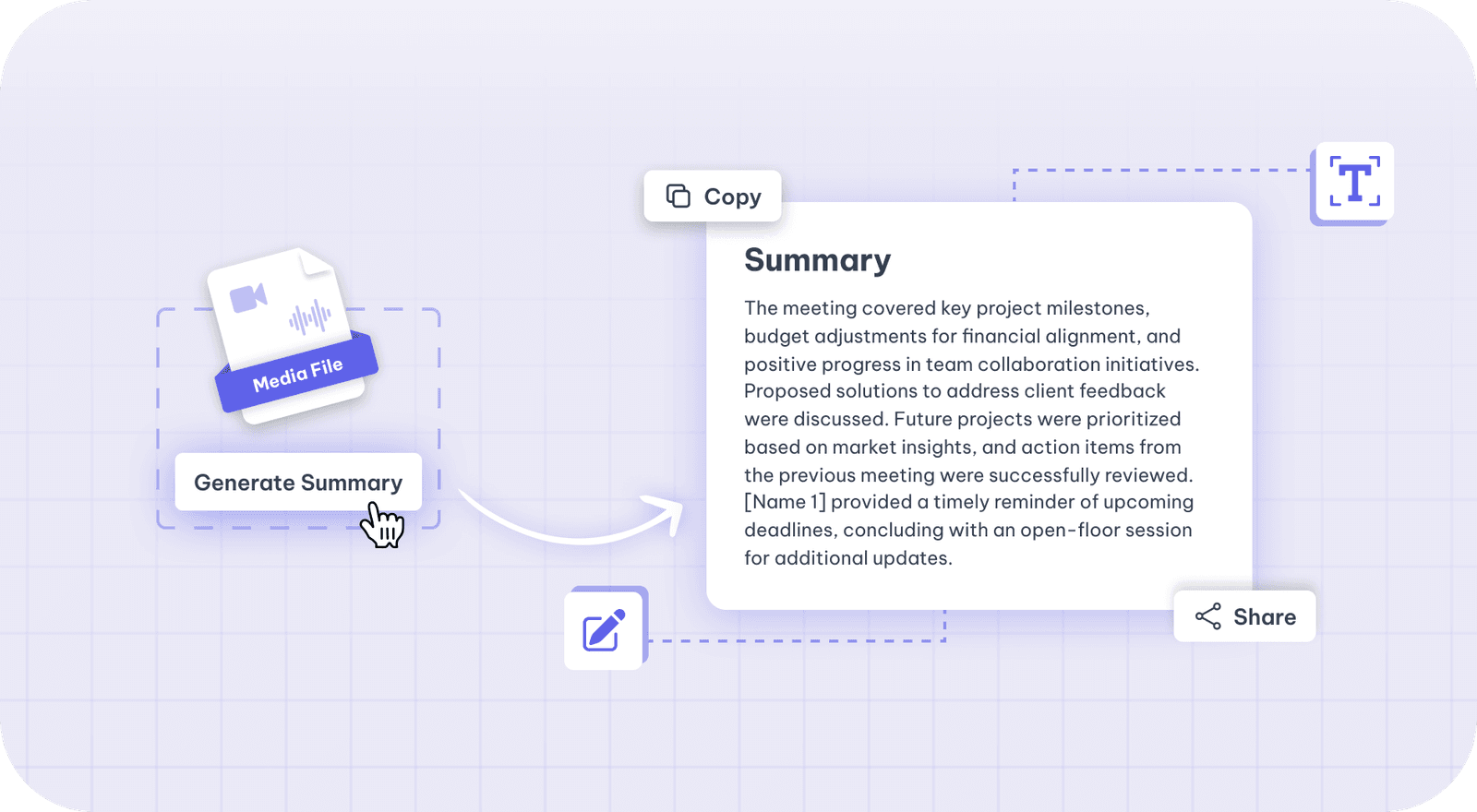
Summary Generator
AI audio and video summarizer: upload a recording or paste a YouTube link, get the transcript,…
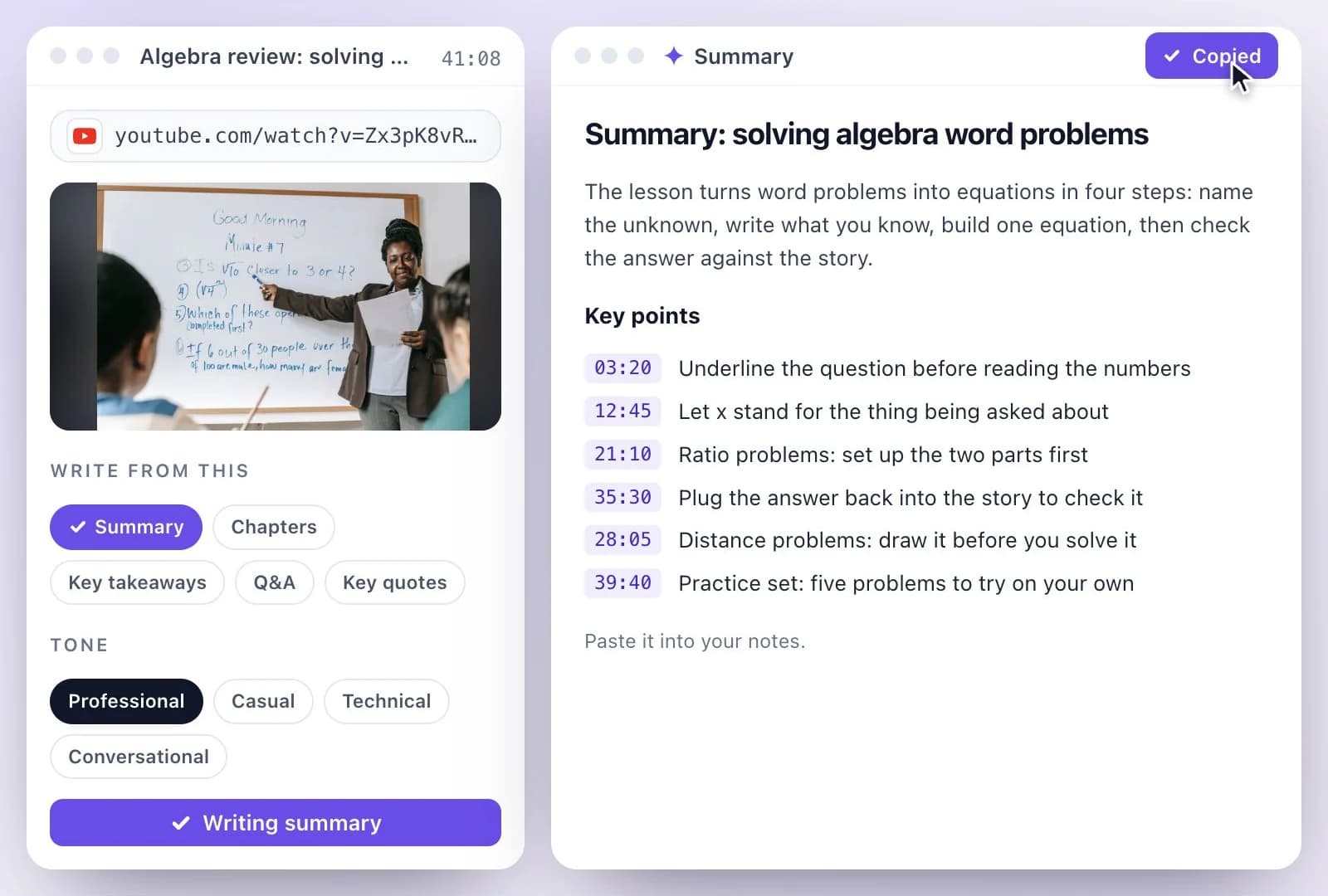
YouTube Video Summary Generator
Paste a YouTube link and get a written summary with key points, plus chapters with timestamps,…
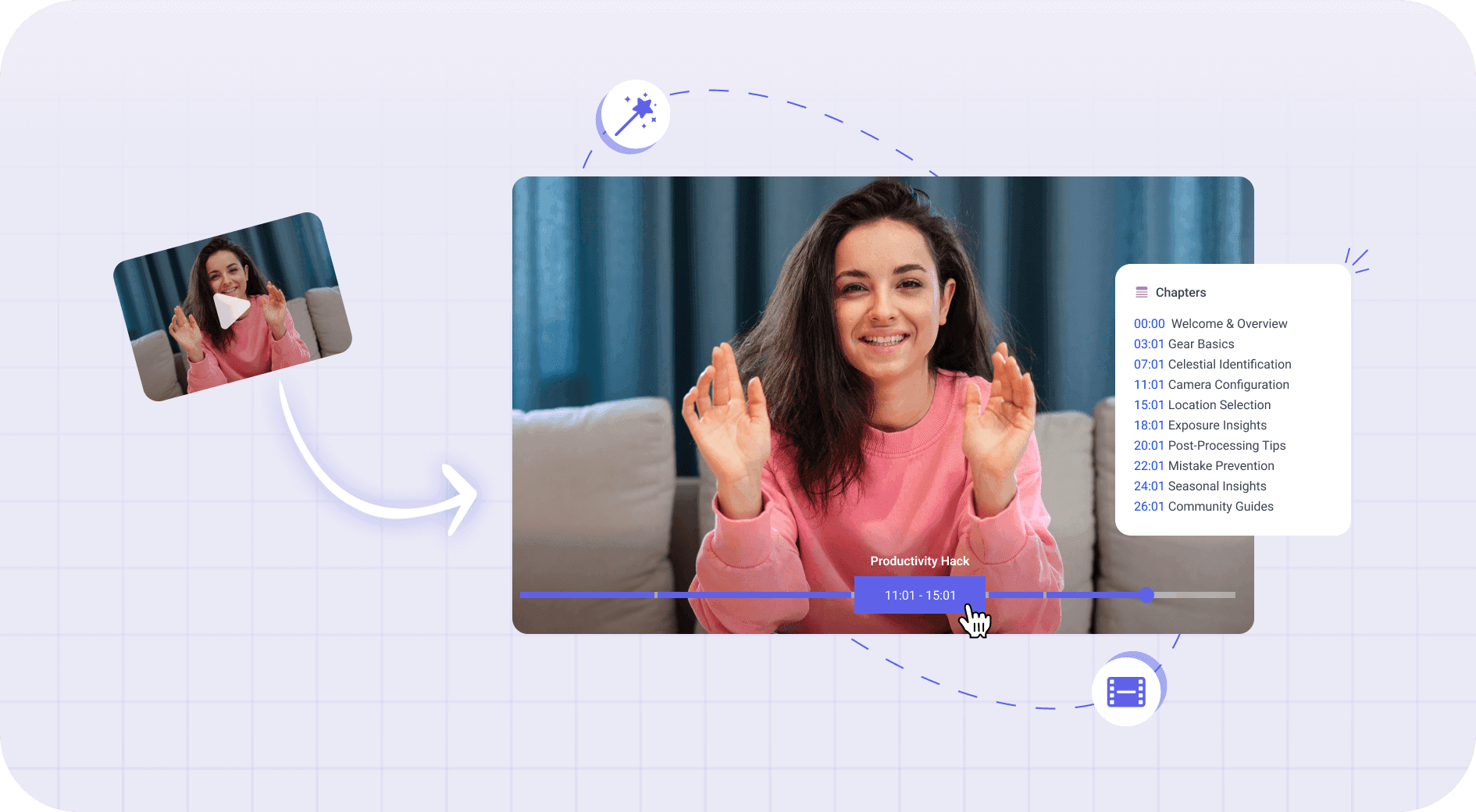
Video Chapter Generator
Video chapter generator: AI splits your video's transcript into up to 10 chapters, each with a…
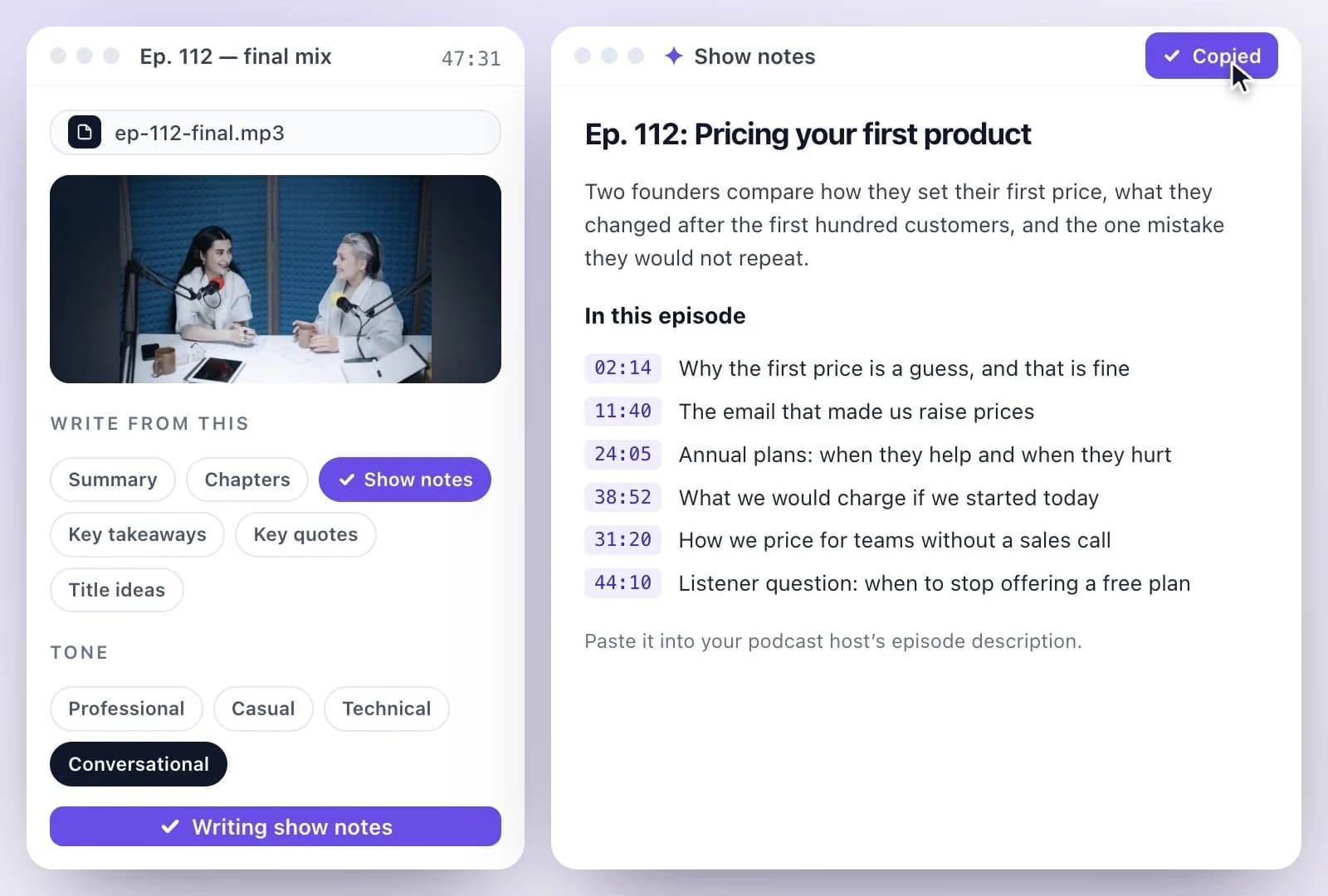
Podcast Show Notes Generator
Upload or link a podcast episode and get show notes: an episode description and highlights,…
YouTube Timestamp is one part of one workspace
YouTube Timestamp is one door into the same workspace. Whatever you came here to make, the rest is already available from the file you just uploaded.
Upload once
The same recording feeds every tool on the site. Nothing needs uploading twice to get a second format out of it.
Caption and translate
Burned-in captions or subtitle files, in the spoken language or translated with the timings kept intact.
Repurpose without re-editing
Clips, chapters, show notes, blog drafts and social posts all come off the one transcript.
Common questions
How do I add timestamps to a YouTube video?
Why are my YouTube chapters not showing?
How does the generator decide where each chapter starts?
Can I change the timestamps before I post them?
What is the difference between timestamps and chapters?
Which languages does the timestamp generator work in?
Is the YouTube timestamp generator free?
Discover more AI Content
- Summary Generator
- YouTube Video Summary Generator
- Video Chapter Generator
- Podcast Show Notes Generator
- Lecture to Notes Generator
- YouTube to Notes Generator
- YouTube Tags Generator
- YouTube to LinkedIn Post Generator
- TikTok Caption Generator
- Chat with YouTube Video Generator
- Video Hook Generator
- Emmy Generator
- YouTube Description Generator
- YouTube Video Title Generator
- Hashtag Generator
- Social Media Post Generator
- Blog Post Generator
- Meeting Minutes Generator
One upload. Every format you need.
Drop in a recording and work from the transcript — clips, captions, chapters, show notes and posts all come from the same file.