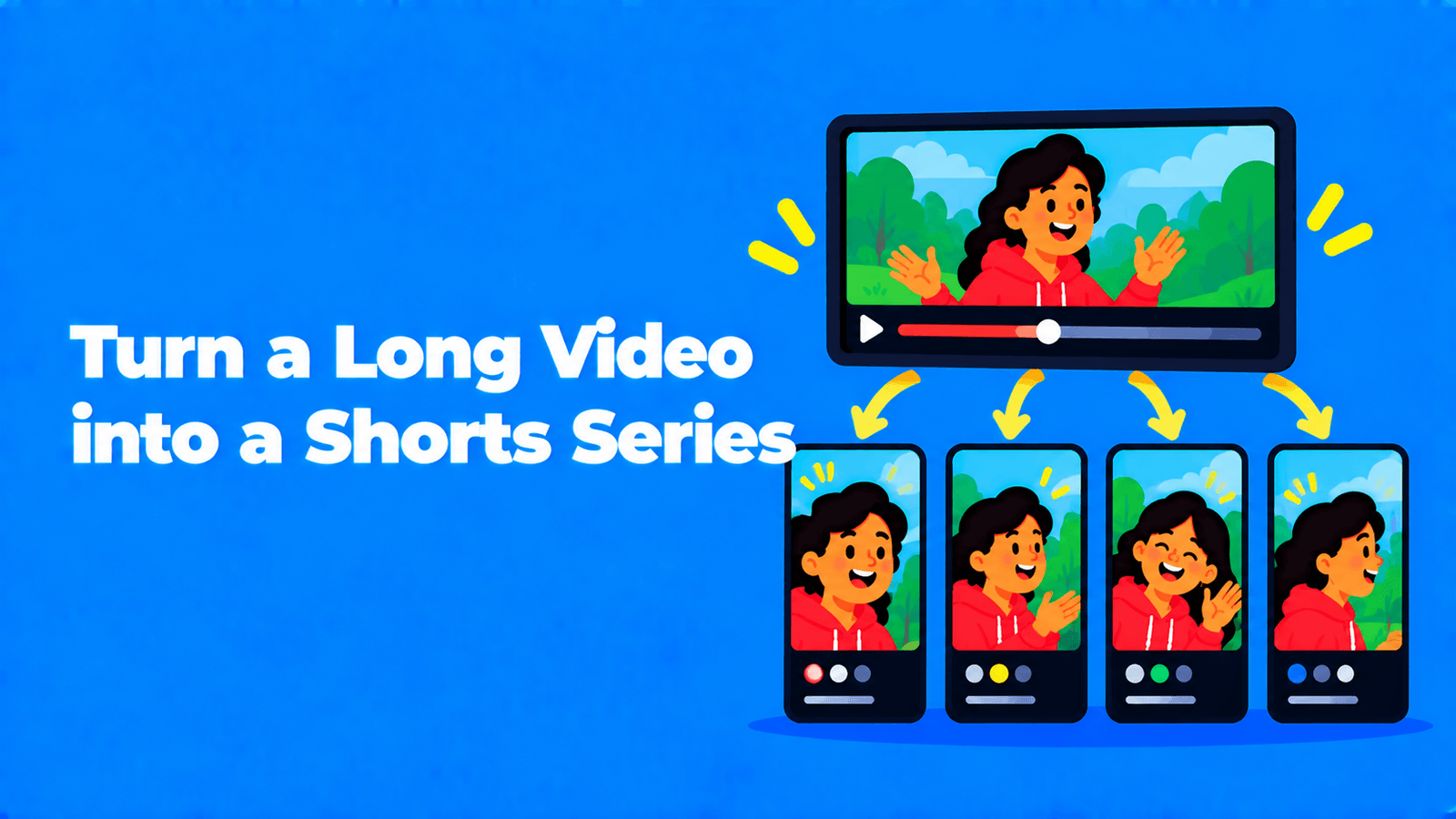
AI video repurposing for your marketing strategy
How to build AI video repurposing into a marketing strategy: choose source videos, plan outputs per channel, and edit AI drafts before you publish.

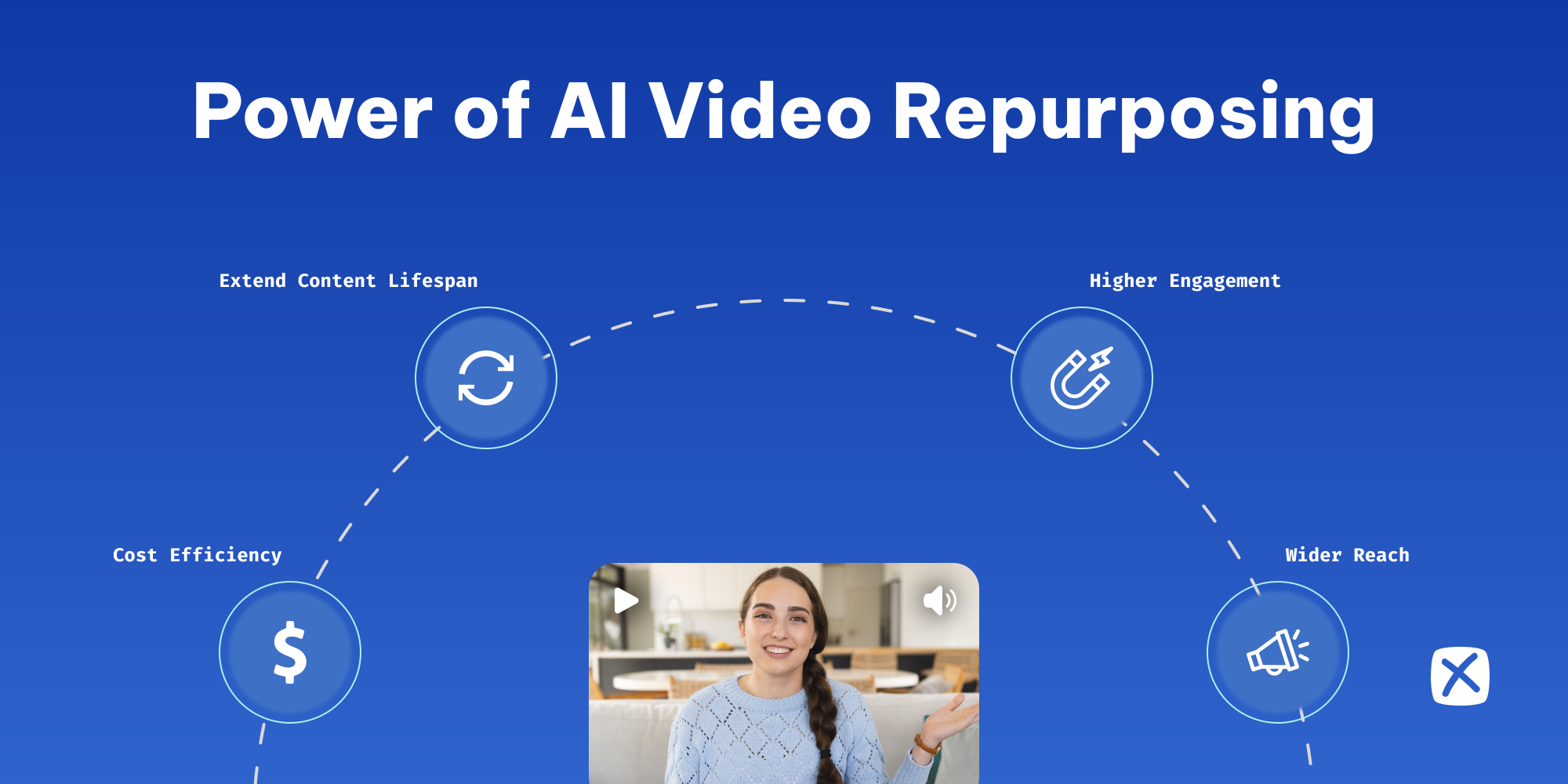
AI video repurposing means using AI tools to turn one long video, such as a webinar, podcast, demo or interview, into many smaller assets: short vertical clips, captioned versions, transcripts, blog posts, newsletter sections and social copy. In a marketing strategy it does two jobs. It lowers the cost of showing up on every channel you care about, and it keeps one message consistent across those channels. The work that still needs people is choosing which videos are worth repurposing, deciding what each asset is for, and editing the AI's first drafts. This guide walks through a practical process as of September 2026.
What AI video repurposing is (and isn't)
Repurposing is more than cutting a long video into pieces. It means reshaping one piece of content for how people use each channel. Someone scrolling Shorts wants a single idea in under a minute. Someone searching Google wants a readable article. A subscriber opening your newsletter wants a quick summary and a link.
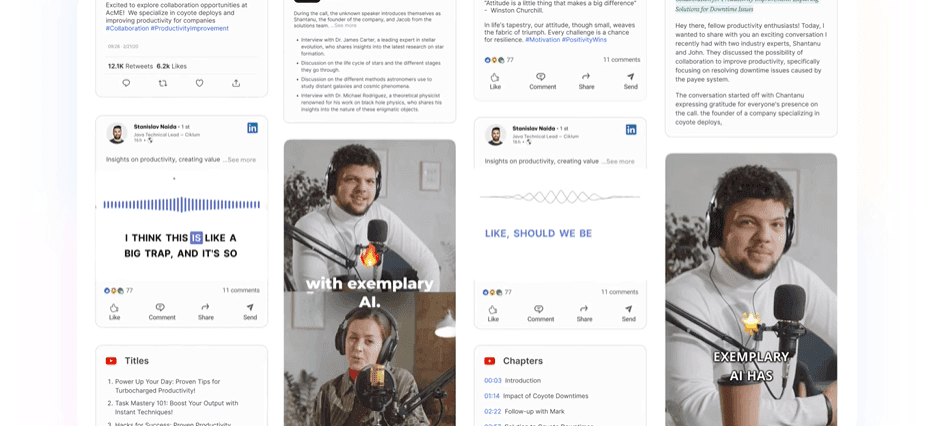
AI speeds up the mechanical steps:
- Transcription turns speech into text, which becomes the raw material for every written asset.
- Clip detection suggests self-contained moments worth cutting out.
- Reframing converts 16:9 footage to vertical 9:16 and keeps the speaker in frame.
- Captioning and translation make clips watchable with the sound off and understandable in other languages.
- Writing assistance drafts titles, descriptions, summaries and blog posts from the transcript.
It doesn't decide your message, check facts, or know which customer story will land with your audience. Those stay with you.
Why it belongs in your marketing strategy
- More value from the videos you already have. A recorded webinar or customer interview has already cost you time. Repurposing spreads that cost across many assets.
- Reach on each channel's terms. Short-form feeds, search, email and LinkedIn each reward different formats. Repurposing lets you meet each one without starting over.
- Consistent messaging. When every asset comes from the same source, product claims and positioning stay aligned.
- Accessibility and global reach. Captions help viewers who are deaf or hard of hearing and anyone watching muted. Translated subtitles open the same video to other language markets.
- Search value, if the content is useful. Turning a video into a well-edited article can help people find it through search. Google's own guidance warns against shortcuts, though. Its helpful-content checklist asks whether you're "changing the date of pages to make them seem fresh when the content has not substantially changed" and whether you're "using extensive automation to produce content on many topics" (Google Search Central). Treat AI drafts as a starting point and add your own expertise.
How to build AI video repurposing into your strategy
1. Choose the right source videos
Start with videos that already did well, or that hold lasting expertise: webinars, product walkthroughs, customer interviews, conference talks and podcast episodes. Evergreen content repurposes better than time-sensitive announcements.
2. Decide the job of each channel
Write one line per channel describing what it's for. For example: Shorts and Reels for reaching new people, LinkedIn for credibility with buyers, the blog for search, email for existing customers. That line tells you which asset each channel gets.
3. Pick tools that match your workflow
Look for accurate transcription in the languages you need, clip suggestions you can edit, reliable reframing, caption styling that matches your brand, and subtitle export (.srt or .vtt) if you publish on several platforms. Our roundup of AI video repurposing tools compares options.
4. Make a repurposing plan per video
For each source video, list the outputs and owners. A typical plan:
- Three to five short clips with hooks and captions
- One blog post or guide built from the transcript
- One newsletter section with a link to the full video
- Social copy for each clip
- Translated subtitles for your top non-English markets
5. Review, publish, measure
Edit every AI draft before it goes out, especially claims, names and numbers. After publishing, compare retention and engagement across clips and formats, then choose the next source videos based on what worked.
Effective ways to repurpose a video
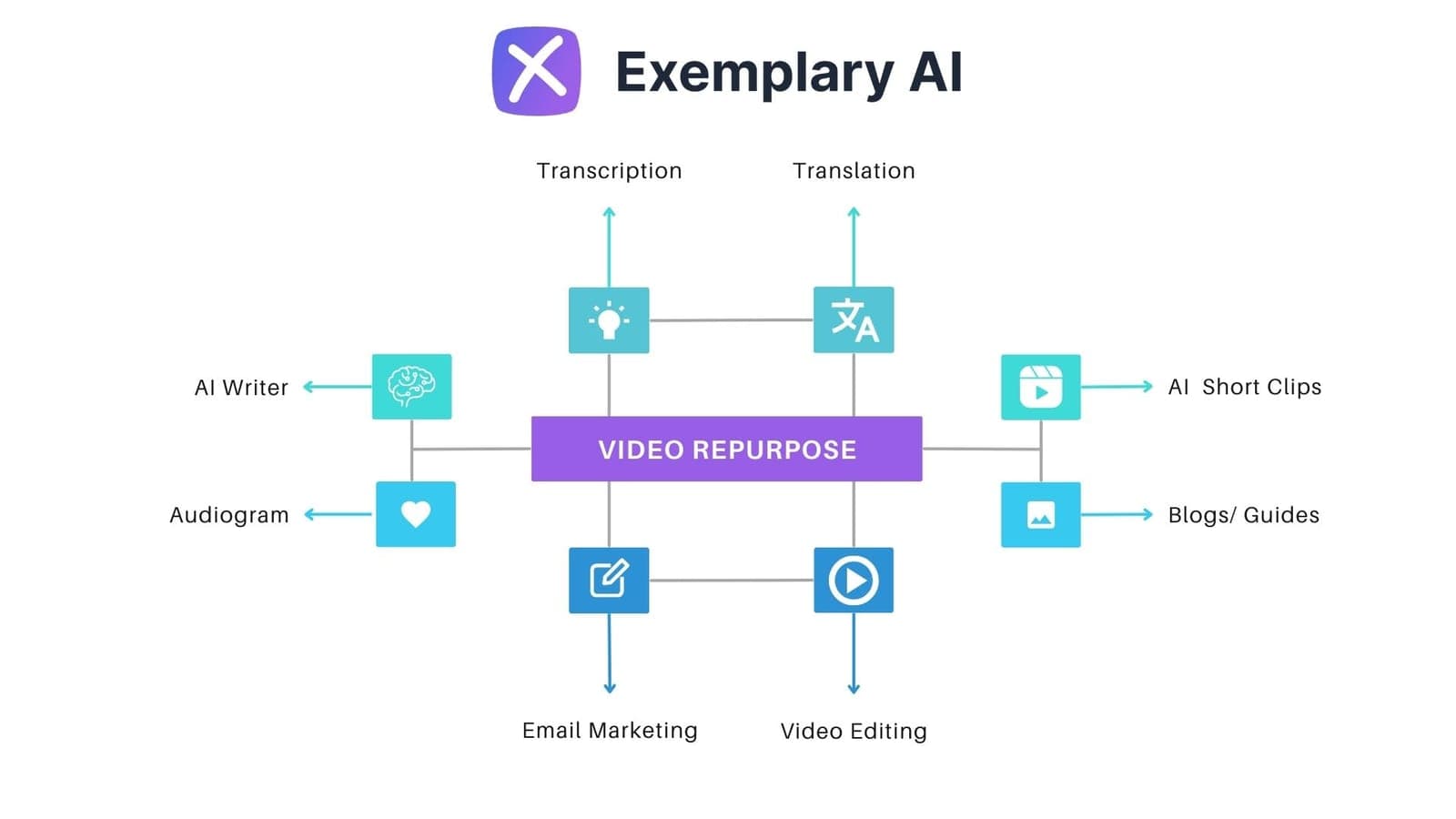
- Short-form clips for YouTube Shorts, Instagram Reels and TikTok. Each clip should make sense without the full video.
- Blog posts and guides from the transcript. Restructure them for reading instead of pasting spoken text. See the AI blog post generator, which takes a YouTube link.
- Email content: a short summary, one key takeaway and a link back to the video.
- Audiograms for audio-first content like podcasts. Our podcast repurposing guide covers this.
- Customer proof: short testimonial clips cut from longer customer interviews, used with the customer's permission.
- Translated versions with subtitles for audiences in other languages.
Where Exemplary AI fits
Disclosure: Exemplary AI is our product. It covers several steps in this workflow. AI Clips finds engaging moments in a long video, reframes them to vertical with active speaker detection, adds animated captions and brand templates, removes silences and filler words, and can add B-roll automatically. It also generates titles and descriptions, and lets you download clips or publish and schedule them to social media. Transcription covers 99 languages. AI Writer drafts blog posts, summaries, titles and descriptions from transcripts. There's a free plan. See pricing for current plans.
Repurpose your next webinar in minutes
Turn a long video into captioned vertical clips, then draft the blog post from the transcript.
FAQ
What is AI video repurposing?
AI video repurposing is using AI tools to turn one long video into several assets for different channels, such as short clips, captions, transcripts, blog posts and social copy. AI handles transcription, clip detection, reframing and first drafts. People choose the message and edit the output.
How do I repurpose a long video into short clips?
Transcribe the video, find three to five moments that stand on their own, reframe them to vertical, and add captions and a hook in the first few seconds. AI clipping tools suggest moments and handle the reframing, but check each clip for context before you publish.
Does repurposing video content help SEO?
It can, if the result is genuinely useful. A well-edited article built from a video's transcript can rank for searches the video alone wouldn't. Google's guidance cautions against mass-producing automated content or re-dating pages without real changes, so add your own edits and expertise.
Which videos should I repurpose first?
Start with evergreen videos that already performed well or hold real expertise: webinars, product walkthroughs, customer interviews, talks and podcast episodes. Time-sensitive announcements usually don't repurpose as well.