01 / 03
Notes are written after the fact
Interviews and consultations get typed up from memory at the end of a shift, which is when detail is thinnest.
Free up yourself from the never-ending documentation of patient interviews with AI. Focus on what needs your focus on.
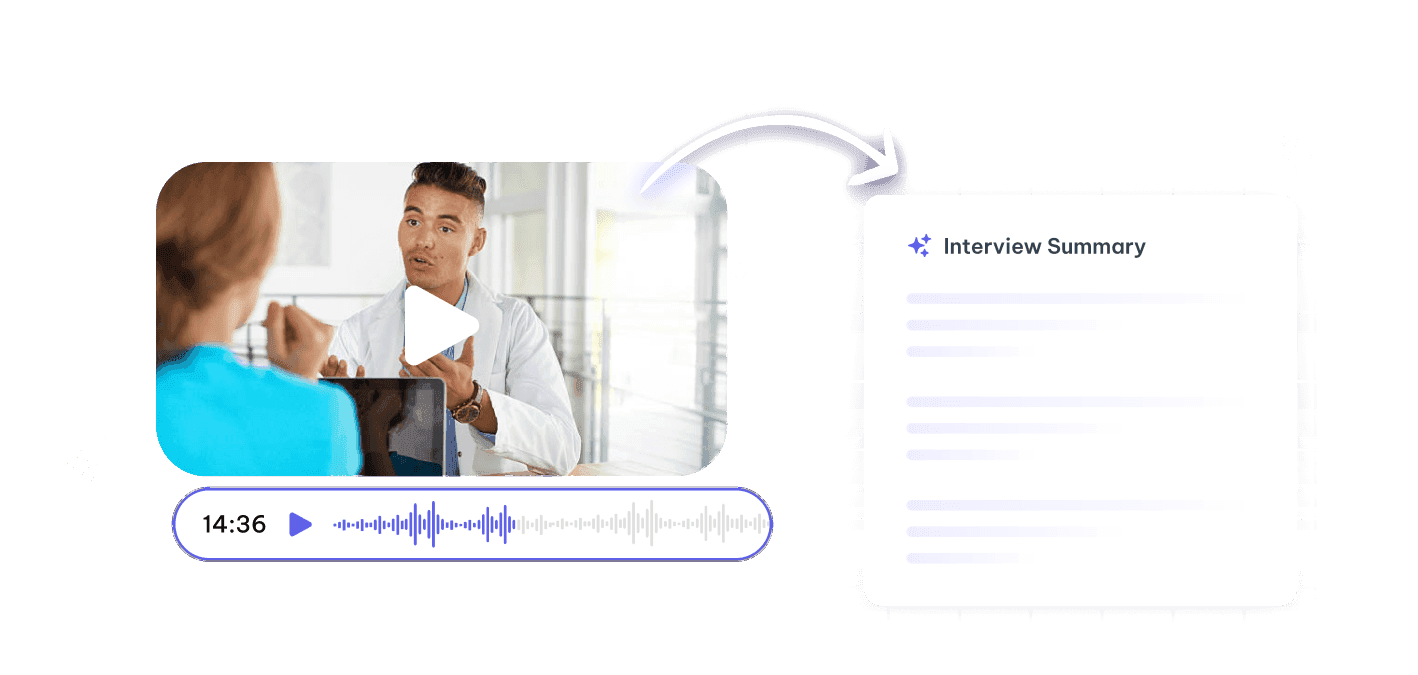
Clinical and training material has to be accurate, accessible and repeatable — and it is nearly all produced by hand.
Interviews and consultations get typed up from memory at the end of a shift, which is when detail is thinnest.
Explaining a procedure once in the room is not the same as the patient being able to revisit it at home in their own language.
A protocol changes and every recorded session that mentions it is quietly out of date, with no way to find them.
A searchable transcript is what makes recorded material maintainable.
Transcription, translation and structured summaries for interviews, education and training.
Transcribe interviews and generate reports and articles for better documentation.
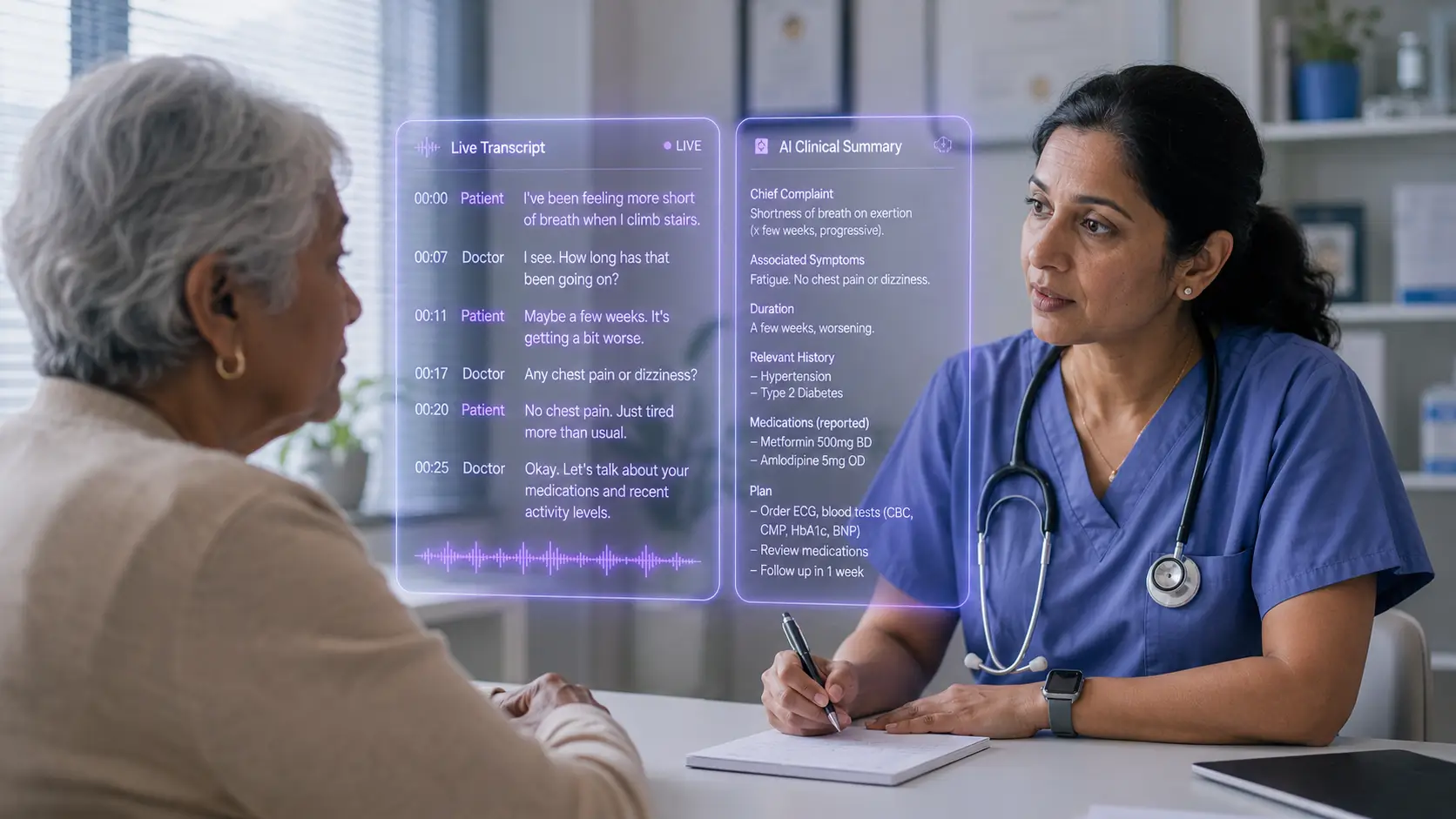
Four steps, with a human check at the point it matters.
A patient interview, a training session or an education video.
Who said what, timestamped, so anything can be traced back to the moment.
The transcript is the editing surface. Clinical terms get checked once, and every export inherits the correction.
Summaries, subtitled education videos and translated versions, all derived from the corrected transcript.
Drop in a recording and work from the transcript — clips, captions, chapters, show notes and posts all come from the same file.